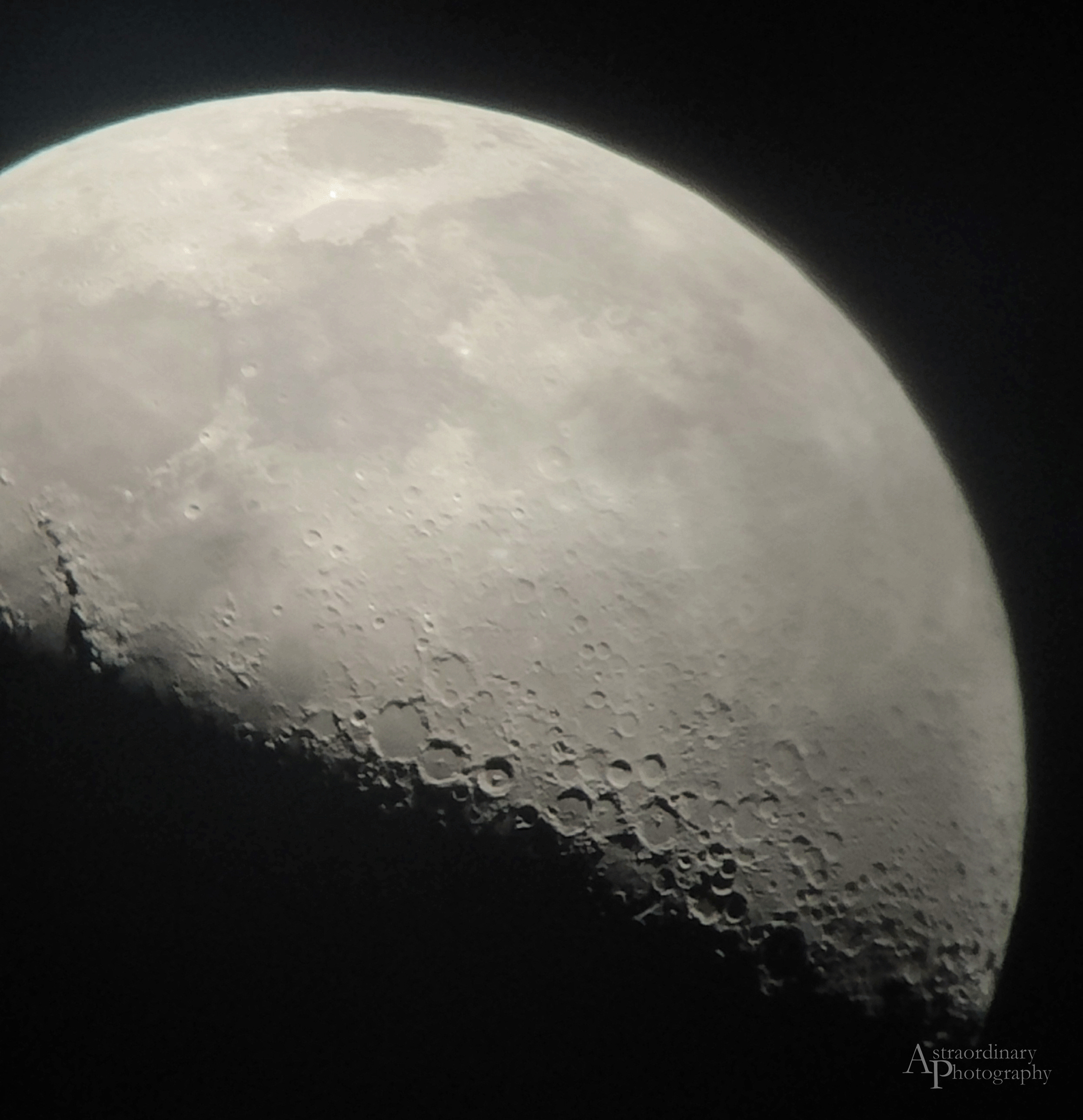
A Labeled Crescent: Apollo Landing Sites
The stunning crescent moon was captured with the help of a KSON telescope with a 25mm eyepiece. Though the image is a lot brighter, it still captures many prominent features of the moon which have been labelled. The blue circles represent the landing spots for various Apollo missions, including Apollo 11 — the first mission that landed humans on the moon on July 20, 1969, carrying Neil Armstrong and Buzz Aldrin — along with Apollo 17, the last time humans landed on the moon, on December 11, 1972. The teal polygons represent the maria on the lunar surface, large dark basaltic plains formed by ancient volcanic activity. Below Mare Vaporum lies the rugged mountain range of Montes Appeninus. Near the Apollo 16 site lies Rupes Altai, the most prominent lunar escarpment. Among the craters, Theophilus, Cyrillus and Catharina form a prominent group visible on the terminator five days after new moon.